9 Tips to Choose a Good Unit in a Resale Condominium in Singapore
By darrenongOn
11min read
Table of Contents
Buying a resale condominium in Singapore is one of the biggest financial commitments most people will ever make. Yet despite the stakes, many buyers choose a unit based on emotion rather than logic; swayed by how well a home is staged, how urgently an agent frames the decision, or simply by market hype around a particular estate.
The truth is, not every resale unit is a good buy, even at a fair-looking price. It’s not enough to find a unit that fits your budget and looks good on viewing day. What actually matters is whether the unit holds its value, stays in demand, and gives you a realistic way out when it’s time to sell.
As someone who has helped many clients secure resale units with strong exit strategies, I’ve seen what separates a unit that performs well over the next 5-10 years from one that quietly becomes hard to sell. In this article, I’ll share the 9 factors I personally use when helping buyers evaluate a resale condo: value for money, layout efficiency, facing, liquidity, capital appreciation potential, school proximity, and future development effects, so you’re choosing a unit with real staying power, not just one that looks good today.
TIP 1: Development Size & Liquidity - How Easy Will It Be to Exit?
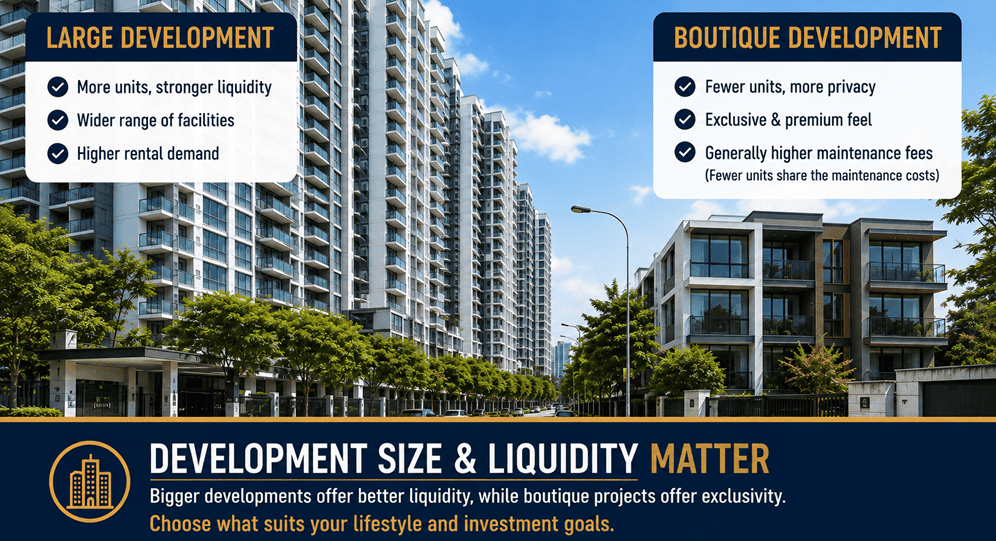
One of the most overlooked factors when choosing a resale unit is the size of the development itself, not the unit, the entire project. While small boutique condos can feel exclusive, larger developments, especially those with 200 units and above, tend to offer better long-term liquidity and an easier exit when it’s time to sell.
The reason is simple: more units generally have a higher chance of having more transactions happening regularly. That steady sales activity gives banks and valuers a stronger benchmark to work from, and gives you, as a future seller, a deeper pool of recent comparable sales to justify your asking price. Larger developments also tend to spread monthly maintenance fees across more households, keeping costs lower, and usually offer a wider range of facilities that appeal to a broader base of future buyers or tenants.
Smaller developments, by contrast, often face genuine liquidity issues. With fewer units changing hands, it’s harder to gauge true market value, and harder still to find recent comparable transactions when you’re ready to sell, which can mean pricing uncertainty and a slower exit. Before you commit, check the development’s transaction history via URA or your agent. A project with consistent sales volume over the past 3 to 5 years is a healthy sign that you’re buying into a genuinely liquid asset, not one that could leave you stuck when you eventually want out.
Large condo developments generally offer stronger transaction liquidity and a wider range of facilities, while boutique developments may provide greater privacy and exclusivity but can have higher maintenance costs due to fewer units sharing the expenses.
TIP 2: Unit Type Matters
Beyond development size, the unit mix within a condo can quietly shape your property’s long-term outcome, especially if you’re buying to live in, not just to invest.
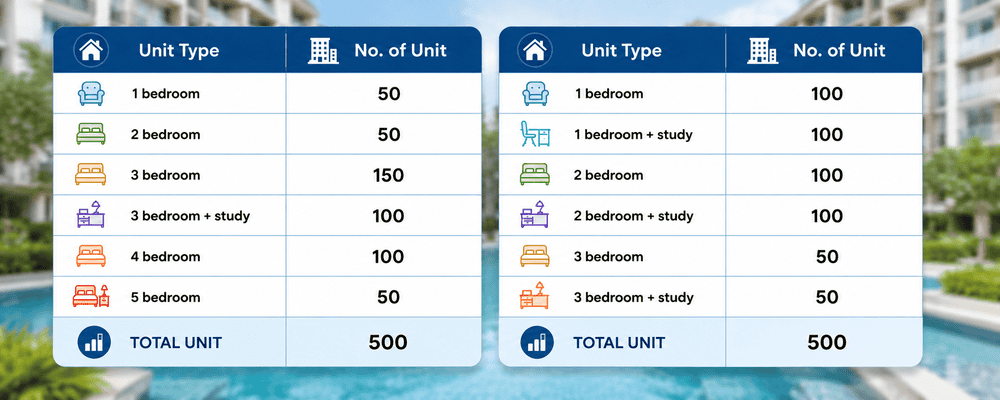
A common mistake is choosing a development heavily skewed toward small 1- and 2-bedroom layouts simply because they’re more affordable. The issue is that these developments often skew toward investor ownership, meaning a higher proportion of units are tenanted rather than owner-occupied. That tends to mean higher tenant turnover, a more transient community, and sometimes inconsistent upkeep. If the entire project is filled with similar small units, you’ll also face tougher competition when it’s your turn to sell, your unit has to stand out among many near-identical listings.
Developments with a more balanced unit mix, including family-sized 3- and 4-bedroom units, tend to attract more owner-occupiers, which supports a more stable community and better long-term holding power. If you’re buying for own-stay, think about who your neighbours are likely to be. If you’re buying for appreciation, choose a unit type that matches genuine, practical demand in that estate rather than just the cheapest entry point.
The unit mix within a condominium can influence the type of residents, rental profile and future resale competition. A more balanced mix may appeal to a broader range of owner-occupiers and buyers.
TIP 3: Compare with Surrounding Developments
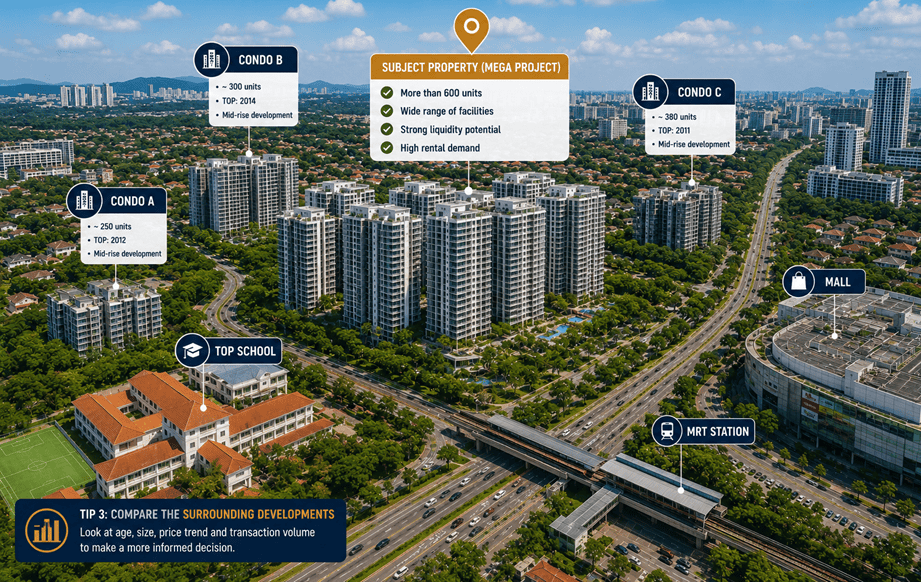
Before committing to any resale unit, look beyond that one project and compare it against similar developments nearby. Buyers who fixate on a single unit without checking what else is available often end up overpaying for something that isn’t actually the best value on the table.
Compare properties with similar lease tenure, location, and unit size. If a comparable development a few streets away offers a noticeably lower price per square foot for similar attributes, dig into why, it could be lower maintenance costs, better facilities, a more efficient layout, or simply a better-run managing agent keeping the estate in better shape.
It’s also worth physically visiting the developments you’re comparing rather than relying on listing photos alone. Walking the grounds tells you far more about cleanliness, facility condition, and overall atmosphere than any online listing can. Some projects look great on paper but feel tired in person, and vice versa, you won’t know which is true until you’ve seen it yourself.
When evaluating a resale condo, compare it with surrounding developments based on factors such as project age, development size, price trends, transaction volume and nearby amenities.
TIP 4: Check the Remaining Lease
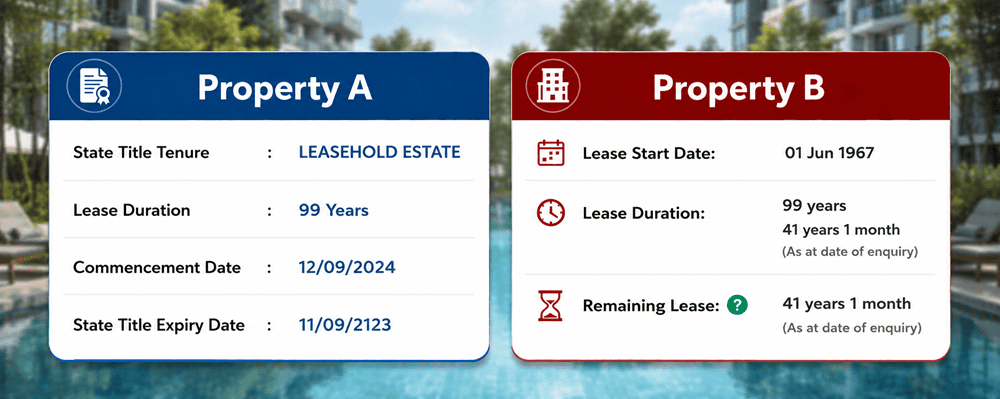
The remaining lease on a resale unit is one of the most consequential, and most overlooked, factors affecting financing, resale value, and long-term demand. Many buyers focus purely on the unit’s current condition and forget that lease decay quietly shapes who can buy it from you later.
The core rule to check is whether the remaining lease can cover the youngest buyer in your household to age 95, your age plus the remaining lease needs to add up to at least 95. If it does, you qualify for full CPF usage up to the Valuation Limit and the standard loan-to-value on your bank loan. If it falls short, both get pro-rated down, and this pivot point moves with the buyer’s age rather than being a fixed number: a 35-year-old needs at least 60 years remaining to clear the test, while a 50-year-old only needs 45 years remaining. Two hard floors apply regardless of age: CPF savings cannot be used at all once the remaining lease drops below 20 years, and bank financing becomes very difficult to secure, often cash-only, once the remaining lease falls to around 30 years or less.
Shorter remaining leases also shrink the pool of future eligible buyers, which can make your own exit harder years down the road. Ask your agent to assess the development’s price trend, whether it’s been climbing, flat, or declining, as a real-world signal of whether the estate is still in healthy demand or already feeling the effects of lease decay.
The remaining lease of a property can affect financing, CPF usage, future buyer demand and long-term resale potential. Buyers should check the lease age carefully before committing.
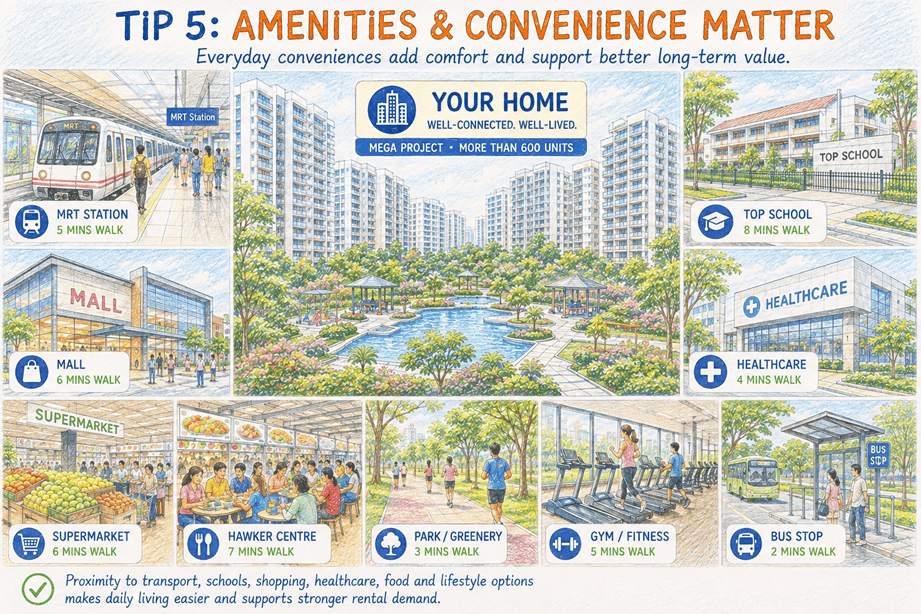
TIP 5: Location, Amenities, Transport & School Proximity
Location remains the single most consistent driver of a resale unit’s long-term value, and three factors within “location” deserve specific attention: transport connectivity, everyday amenities, and school proximity.
On transport, genuine walkability matters more than most buyers realize. Homes within a comfortable 5-10 minute walk of an MRT station, roughly a 1km radius, consistently see faster rental absorption, stronger negotiating power for landlords, and a deeper buyer pool at resale, compared to units that require a bus connection or a long walk in Singapore’s heat.
On schools, proximity is one of the most reliable drivers of owner-occupier demand. Units within 1km of a reputable primary school benefit from priority enrolment advantages, which many parents will pay a premium to secure. This creates a steady, resilient pool of family buyers that tends to hold up even when the broader market softens, a meaningfully different (and often more stable) demand base than units that rely purely on investor or tenant interest.
Round this out by checking proximity to supermarkets, malls, and dining options. None of these factors work in isolation, but a unit that scores well across transport, schools, and everyday amenities together tends to hold both rental and resale demand far better than one that only wins on one dimension.
Good connectivity and nearby amenities can make everyday living more convenient while supporting stronger rental and resale demand over time.
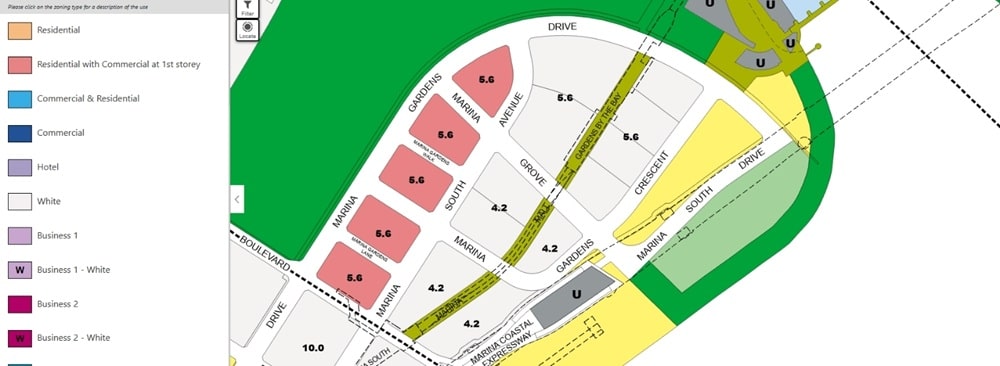
TIP 6: Study the URA Master Plan & Upcoming Government Land Sales
Before committing to a resale unit, check the URA Master Plan for the area; a free, publicly available tool showing what’s planned nearby, from new residential estates to MRT lines, healthcare facilities, and commercial hubs. Look out for vacant plots zoned for future residential or mixed-use development; these often signal a neighbourhood on the verge of a meaningful upgrade in appeal and value. On the flip side, be cautious of units directly facing industrial-zoned land, which tends to bring noise and lower long-term desirability.
Alongside the Master Plan, keep an eye on upcoming Government Land Sales (GLS) near your target development. When a new site nearby is awarded at a higher land cost, it often resets the price benchmark for future developments in the area, which in turn can make existing resale units look comparatively better value, renewing buyer interest and supporting price movement. This pattern has played out repeatedly across Singapore: earlier GLS activity helped lift areas like Pasir Ris, Punggol, and Beauty World, while more recent examples include Tampines, Tengah, and Lentor. As land is progressively released and construction costs continue rising, each new project tends to set a progressively higher breakeven price, which is exactly why understanding the GLS pipeline gives you a forward-looking view, not just a backward-looking one based on past transactions.
The URA Master Plan can help buyers understand how the surrounding area may evolve, including future residential, commercial, transport and other planned developments.
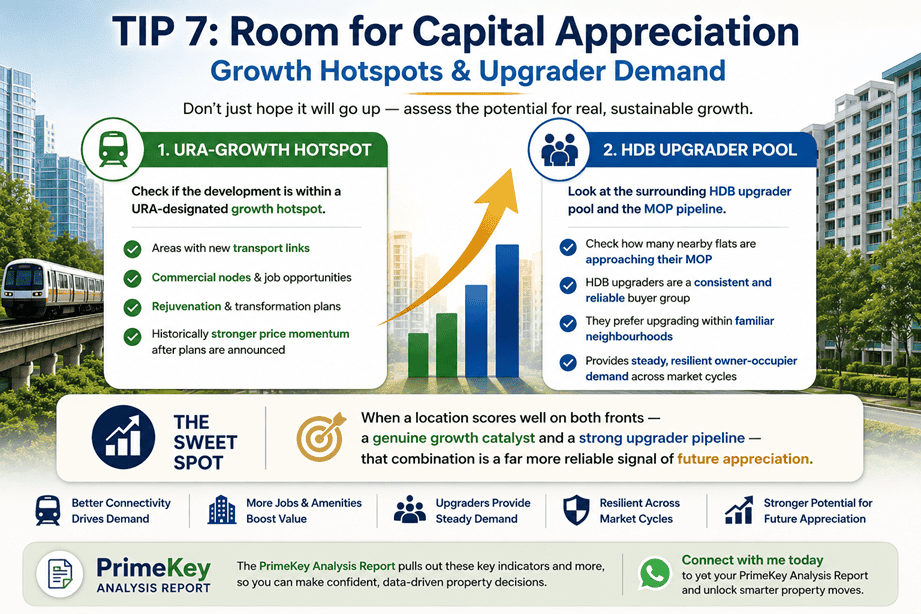
TIP 7: Room for Capital Appreciation - Growth Hotspots & Upgrader Demand
Beyond avoiding downside, it’s worth actively assessing whether a resale unit has genuine room to grow in value, rather than simply hoping it will.
Two indicators are particularly useful here. First, check whether the development sits within a URA-designated growth hotspot, areas earmarked for new transport links, commercial nodes, or rejuvenation plans have historically shown stronger price momentum than mature estates without major upcoming upgrades. Places like Marina Bay, Sengkang, Jurong Lake District, Bidadari, and Beauty World all saw this play out after their transformation plans were announced.
Second, look at the surrounding HDB upgrader pool, specifically, how many nearby flats are approaching their Minimum Occupation Period (MOP). HDB upgraders are one of the most consistent buyer groups in Singapore’s private property market, since many naturally prefer to upgrade within a familiar neighbourhood, close to their existing schools, workplaces, and family networks. Estates with a healthy pipeline of MOP-eligible flats nearby tend to enjoy a steady, resilient stream of genuine owner-occupier demand, support that tends to hold up across market cycles, unlike demand driven purely by short-term investment sentiment.
When a location scores well on both fronts, a genuine growth catalyst and a strong upgrader pipeline, that combination is a far more reliable signal of future appreciation than relying on past price charts alone.
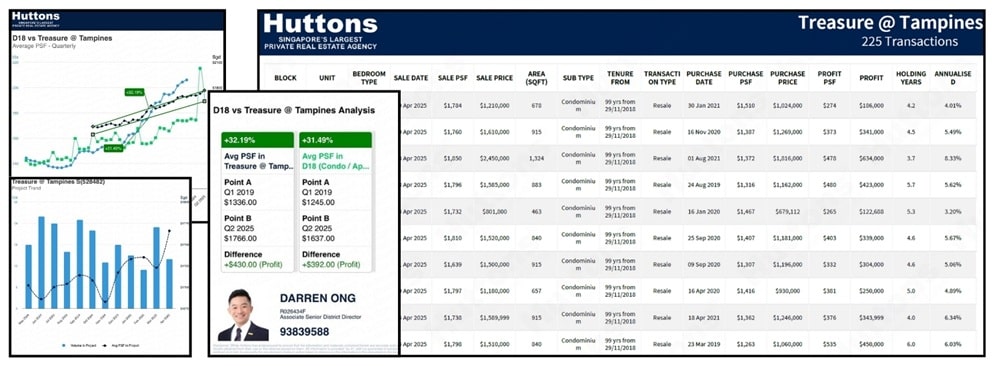
Future capital appreciation is stronger when a property benefits from both a genuine growth catalyst and a healthy pipeline of nearby HDB upgraders. The PrimeKey Analysis Report helps identify these indicators to support a more informed property decision.
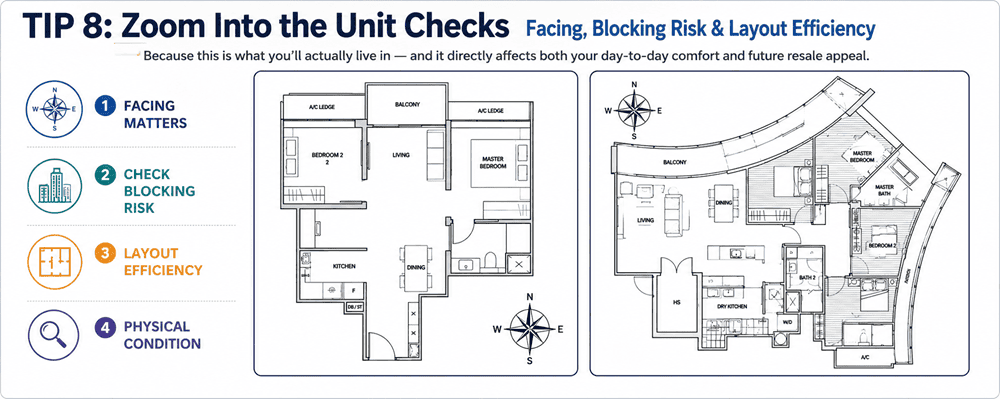
TIP 8: Zoom Into the Unit Checks - Facing, Blocking Risk & Layout Efficiency
Once you’ve assessed the development and location, it’s time to zoom into the specific unit, because this is what you’ll actually live in, and it directly affects both your day-to-day comfort and future resale appeal.
Start with facing. In Singapore’s tropical climate, west-facing units can become uncomfortably hot in the afternoon, which affects both your comfort and your future buyer pool, many savvy buyers avoid west-facing units for exactly this reason. Just as important is blocking risk: don’t assume today’s unblocked view is permanent. Check the URA Master Plan (Tip 6) for the Gross Plot Ratio and height controls on any vacant or low-rise plots nearby, a view that looks safe today could be built out within a few years if the surrounding land allows for it.
Layout efficiency is the other half of the equation. Look out for awkward corners, long corridors, or oversized air-con ledges and bay windows that quietly eat into usable space, these reduce a unit’s functional size even when the strata area on paper looks generous. A practical way to check: bring a measuring tape to your viewing and compare the actual room dimensions against your furniture needs, rather than relying on the floor plan’s visual proportions alone.
Also check the unit’s physical condition, signs of water seepage, popping tiles, poor ventilation, or visible cracks can point to deeper waterproofing or structural issues that are costly to fix and can hurt your resale value later. Renovation can fix aesthetics, but it can’t fix facing, layout efficiency, or blocking risk, these are permanent characteristics you’re buying into for as long as you own the unit.
When assessing a resale condo unit, look beyond the overall size. Check the unit’s facing, potential blocking risk, layout efficiency and physical condition before making a decision.
TIP 9: Value for Money - Is the Asking Price Reasonable?
In a hot market, or when a unit is well-presented, it’s easy to get swept up and rush into an offer for fear of missing out. But one of the most important steps before committing is checking whether the asking price genuinely reflects fair value, not just what the seller hopes to get.
Start by benchmarking against recent transactions in the same development, or nearby projects with similar attributes, rather than accepting the listed price at face value. A well-prepared Comparative Market Analysis (CMA) from your agent shows exactly how your target unit stacks up against similar units by size, floor, and facing, and highlights any fair premium or discount based on condition or specific features.
It’s also worth understanding a mechanic many buyers overlook: your bank will conduct its own independent valuation as part of your loan application, and your loan-to-value (LTV) ratio is calculated against whichever is lower, the bank’s valuation or your agreed purchase price. If you agree to pay above the bank’s valuation, you’ll need to fund that gap entirely in cash. Getting a sense of likely valuation before you make an offer, not after, protects you from over-committing to a price the bank won’t fully finance, and gives you a factual, defensible number to negotiate around.
Before making an offer on a resale condo, compare recent transactions, review a Comparative Market Analysis and understand the likely bank valuation to assess whether the asking price is reasonable.
Final Thoughts: Buy Smart, Plan Ahead
Choosing a resale condo in Singapore is about more than finding a place that looks good on viewing day, it’s a decision that shapes your finances for years to come. A well-chosen unit should serve your needs today while still holding genuine appeal for the next buyer, whether that’s five years or fifteen years from now.
By weighing development liquidity, unit type, remaining lease, location and school proximity, future development plans, genuine growth potential, the specific unit’s facing and layout, and whether the price truly reflects fair value, you’re not just buying a home, you’re buying an asset that should be evaluated on logic, not emotion. Ask yourself honestly: who will want to buy this unit from me in 5 to 10 years? Will it still appeal to the next generation of buyers or tenants?
Whether you’re a first-time buyer, an upgrader, or a seasoned investor, these fundamentals don’t change. The goal isn’t just to buy a resale unit, it’s to buy the right one.
If you’d like a second opinion on a resale unit you’re considering, or want me to run it through my PrimeKey Analysis for a clearer, data-backed view of its strengths and blind spots, feel free to connect with me. No obligation either way.
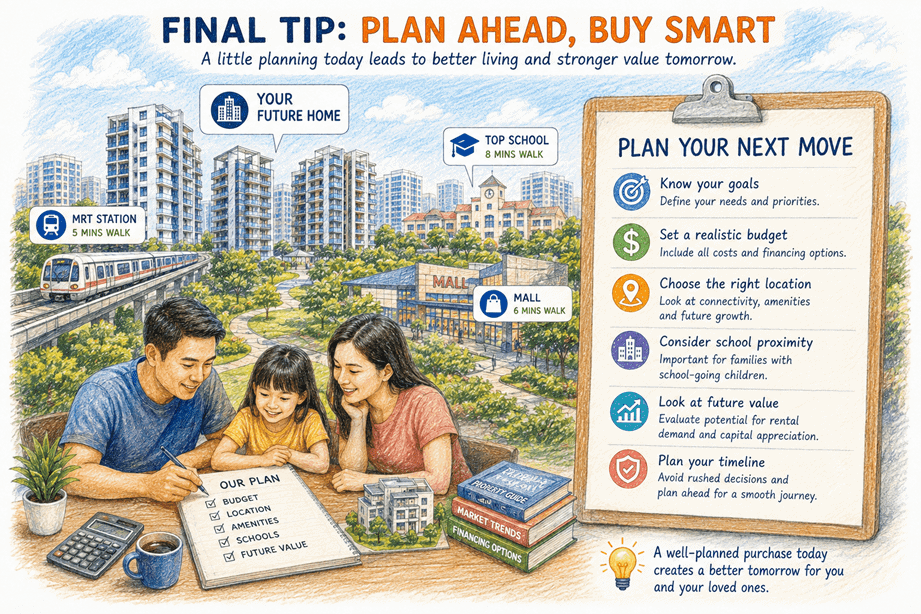
A good property decision goes beyond finding a unit you like. Plan your budget, location, school proximity, amenities, future value and timeline carefully before committing.
Need Real Estate Consultation?
Contact Me
Feel free to connect with me!
Group District Director Huttons Asia Pte Ltd CEA Registration No.: R026434F Agency License: L3008899K Contact: 93839588
Please follow and like us if you like my articles:
error: Content is protected !!
WhatsApp us
Get Your PrimeKey Analysis Report
Share what you’re considering. I’ll reply with a data-backed view and what to watch out for.
By submitting, you agree to be contacted for this request. Your details won’t be shared.



 On
On